
LemonadeJS - Lightweight reactive JavaScript library
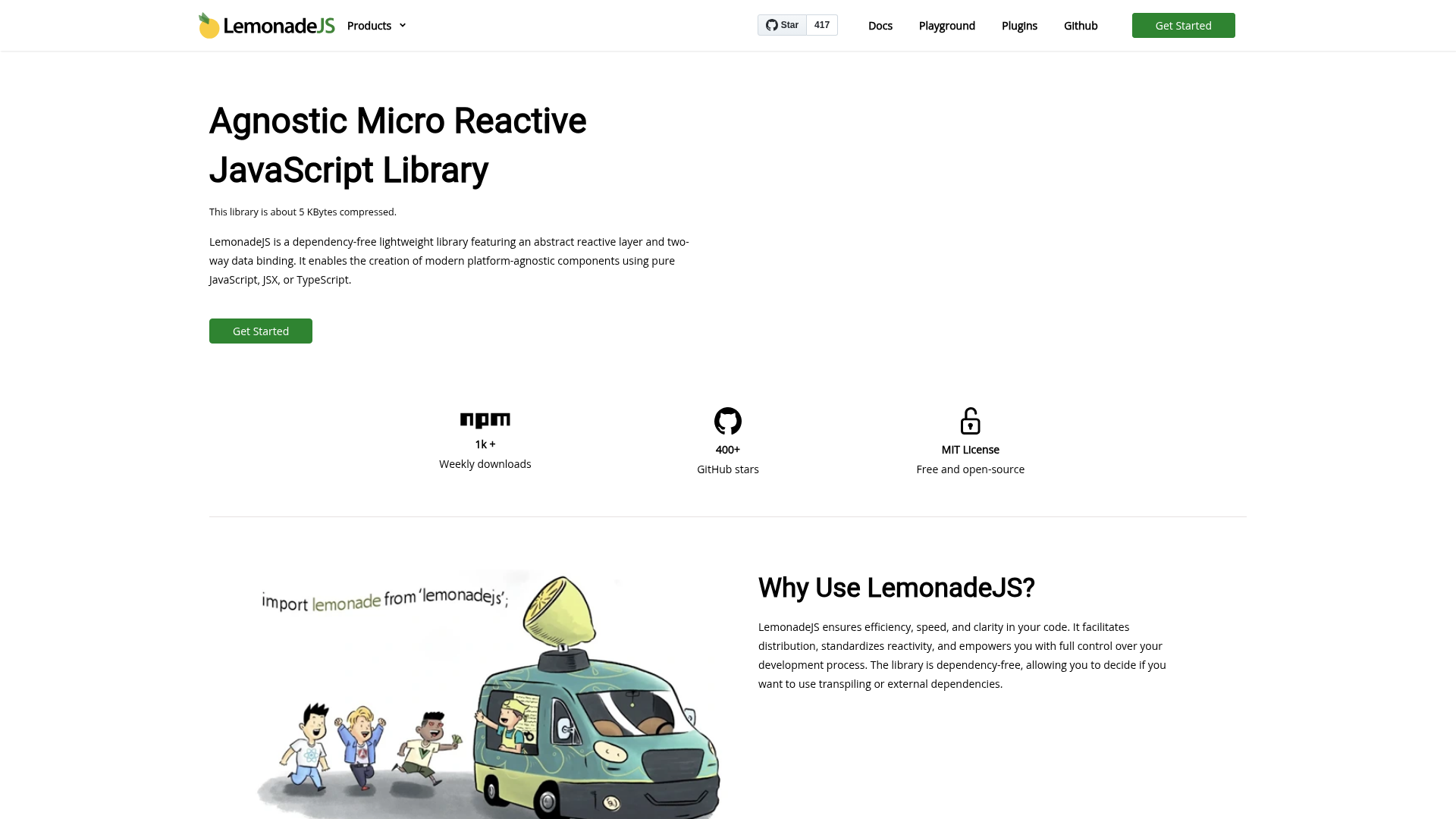
LemonadeJS is a dependency-free lightweight library featuring an abstract reactive layer and two-way data binding. It enables the creation of modern platform-agnostic components using pure JavaScript, JSX, or TypeScript. The library is just 5 KBytes compressed and integrates with popular front-end frameworks like VUE, React, and Angular. LemonadeJS ensures efficiency, speed, and clarity in your code while providing flexibility without sacrificing performance. It supports a pub/sub pattern for seamless synchronization and reactivity across applications. The library is free and open-source under the MIT License.
Product Introduction
LemonadeJS is a lightweight (5 KB compressed) JavaScript library designed for modern web development. It offers an abstract reactive layer and two-way data binding, enabling developers to create platform-agnostic components using JavaScript, JSX, or TypeScript. The library is dependency-free, ensuring flexibility and control over the development process.
Functional Principle
LemonadeJS uses a reactive layer to synchronize changes between component properties and HTML elements. Key features include:
- Two-way Data Binding: Synchronizes component properties with HTML element values.
- Sugar: A pub/sub system for global state management and action dispatching.
- Components: Reusable functionalities like data grids, modals, and calendars.
Usage
Basic Example
import { set, dispatch } from 'lemonadejs';

export default function Profile() {
    set('updateName', (s) => {
        this.name = s.name;
    });

    return render => render`<form>
        <label>Name:</label><br/>
        <input type="text" :bind="${this.name}" /><br/>
    </form>`;
}
Key Features
- Lightweight: 5 KB compressed.
- Agnostic: Works with VUE, React, and Angular.
- Flexible: No dependencies or transpiling required.

Advantages and Disadvantages
Advantages
- Lightweight: Minimal footprint.
- Flexible: Supports multiple coding styles (JavaScript, JSX, TypeScript).
- Reactive: Efficient two-way data binding.
Disadvantages
- Limited Ecosystem: Fewer plugins compared to larger frameworks.
- Learning Curve: Requires understanding of reactive patterns.
Support and Service
LemonadeJS is open-source with community support. Documentation and examples are available on the official website.
FAQs
LemonadeJS
Lightweight reactive JavaScript library
Featured

AI Jewelry Model
AI-powered jewelry virtual try-on and photography

SVGMaker
AIpowered SVG generation and editing platform

DatePhotos.AI
AI dating photos that actually get you matches

iMideo
AllinOne AI video generation platform

No Code Website Builder
1000+ curated no-code templates in one place

The Complete Guide to AI Content Creation in 2026
Master AI content creation with our comprehensive guide. Discover the best AI tools, workflows, and strategies to create high-quality content faster in 2026.

12 Best AI Coding Tools in 2026: Tested & Ranked
We tested 30+ AI coding tools to find the 12 best in 2026. Compare features, pricing, and real-world performance of Cursor, GitHub Copilot, Windsurf & more.
Comments